The Reality of Informal Areas
The Democratic Resettlement Community (DRC) is the largest informal settlement in Swakopmund. Established in 2001 as a temporary resettlement area for families waiting for affordable housing, it has grown into a community of an estimated 40,000–45,000 people, many of whom migrated to the town in search of work and the hope of a better life.
For many families, that hope remains just out of reach. The DRC faces an estimated unemployment rate of over 60%, leaving many households without a stable source of income. Those who are employed often rely on seasonal or informal work, earning just enough to survive from one day to the next.
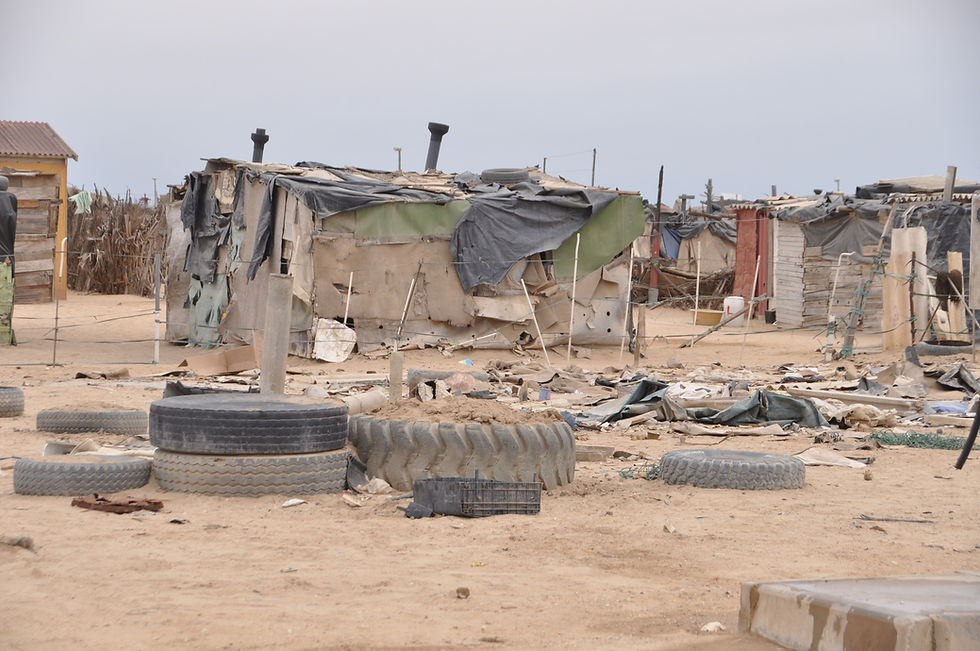
Housing conditions are extremely difficult. Most families live in small shacks constructed from corrugated iron sheets, reclaimed wood, plastic, and other salvaged materials. These structures offer little protection from the harsh coastal weather—becoming unbearably hot during the day, freezing at night, and vulnerable to strong winds and heavy rain. Many homes consist of only one or two small rooms, where entire families sleep, cook, and live together. Access to electricity, running water, sanitation, and waste removal remains limited, forcing many residents to share communal taps and toilets or travel long distances to access basic services.
Poverty affects nearly every aspect of daily life. Parents often face impossible choices between buying food, paying school fees, or purchasing warm clothing for their children. Hunger, malnutrition, and poor living conditions make children particularly vulnerable, limiting their opportunities to learn and thrive. Despite these hardships, families continue to show remarkable resilience, working tirelessly to provide a better future for the next generation.
The DRC is a community rich in courage, determination, and hope. Every child who receives an education, every parent who gains employment, and every family that finds stability represents a step toward breaking the cycle of poverty and creating lasting change.

Lack of Sanitation
Most residents share communal toilets or have no access at all, leading to significant health risks and a lack of dignity in daily life.
Water Scarcity
Clean water is a luxury. Families often walk long distances to public taps, carrying heavy containers to meet basic cooking and cleaning needs.
The Burden on Women
Economic Hardship & Work
Mothers here face heavy hearts and harsh traditions. Often judged for seeking work, they struggle to care for five or more children while searching daily for water and firewood to survive. Without their own income, they depend on the meager earnings of men, making the simple task of feeding their family a constant battle.
Safety & Health Risks
With gender-based violence, rape, and many other dangers in this harsh environment, women feel trapped. Every day they try their best to create a happy home and provide the best they can for their children, but everything comes with a price.

Structural Safety
Shacks offer little protection against Swakopmund's coastal winds, extreme temperatures, or the constant threat of settlement fires.
The Future at Risk: Children
Barriers to Education
Distance to schools and the lack of quiet, lit spaces to study at home make staying in education a monumental challenge. Many children assist with household chores, further limiting attendance.
Nutrition & Development
Without consistent access to diverse food sources, malnutrition is common. This stunts physical growth and hinders cognitive development during critical early years.

Why Your Presence Matters
These challenges are immense, but they are not insurmountable. Community support and strategic donations provide the bridge from struggle to stability. By funding a safe haven, nutritional programs, and vocational training, you are not just offering temporary relief—you are investing in the dignity of a woman and the future of a child.
EDUCATION • FOOD SECURITY • SKILLS EMPOWERMENT • SAFE HAVEN •